Customer rating!

Project summary
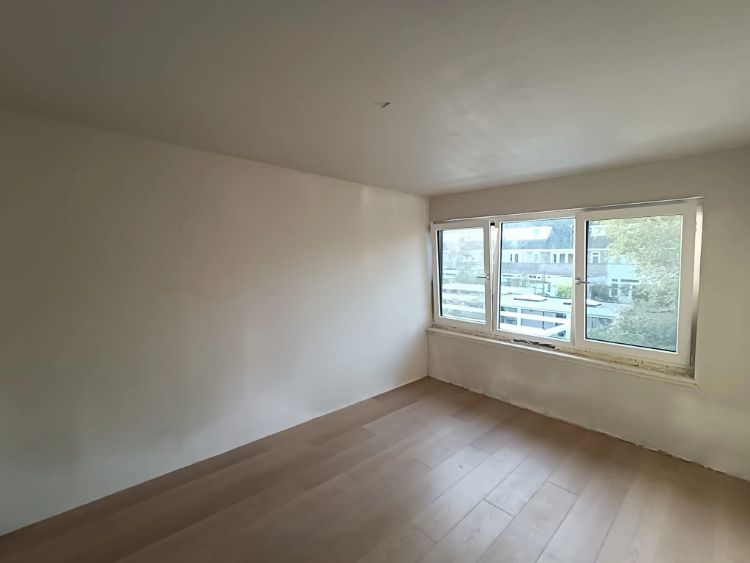
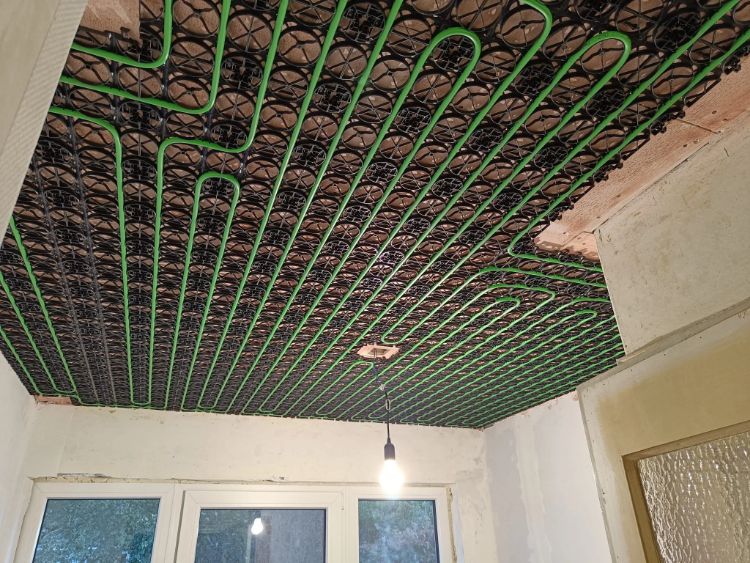
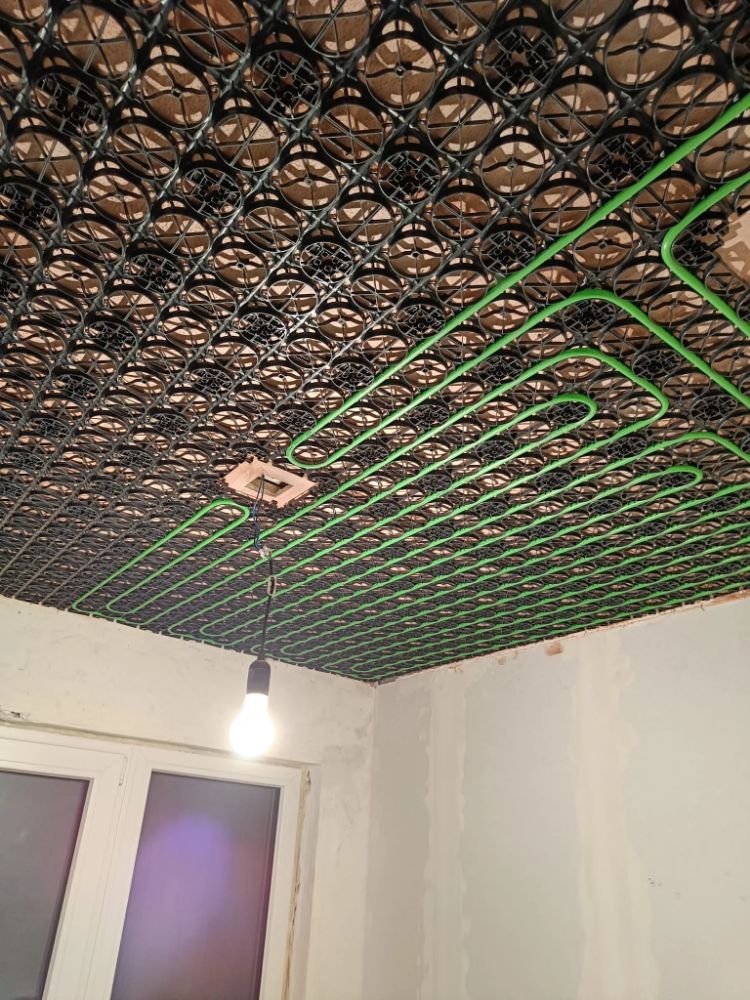
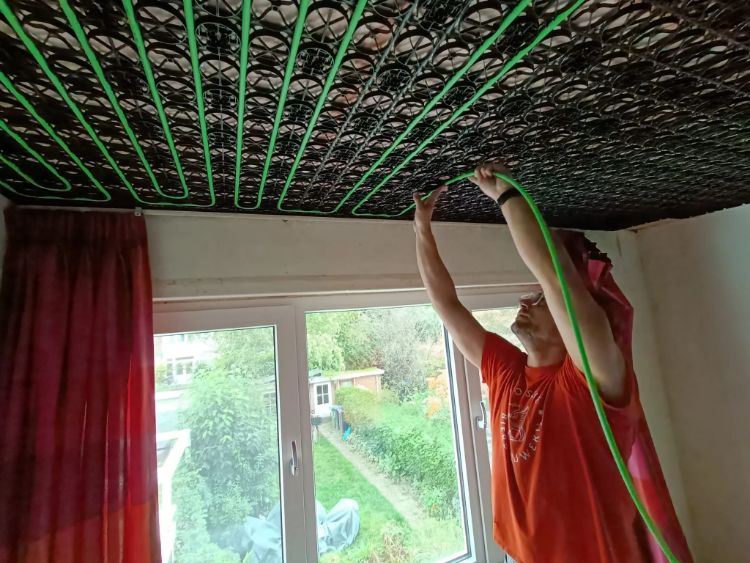
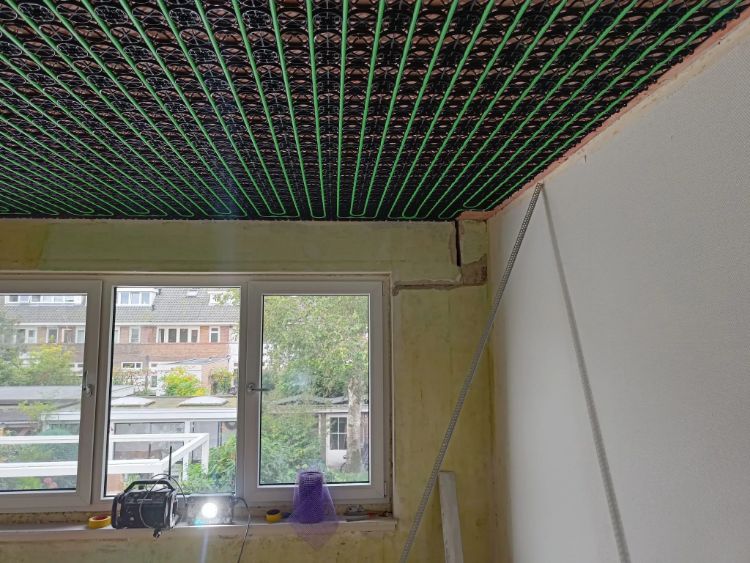
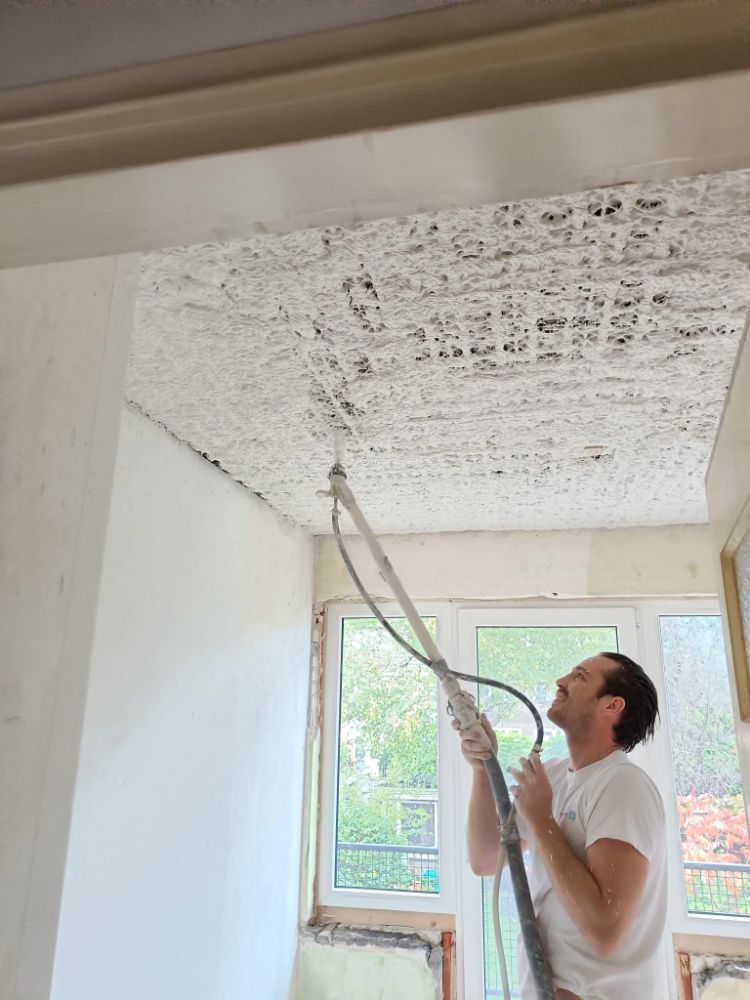
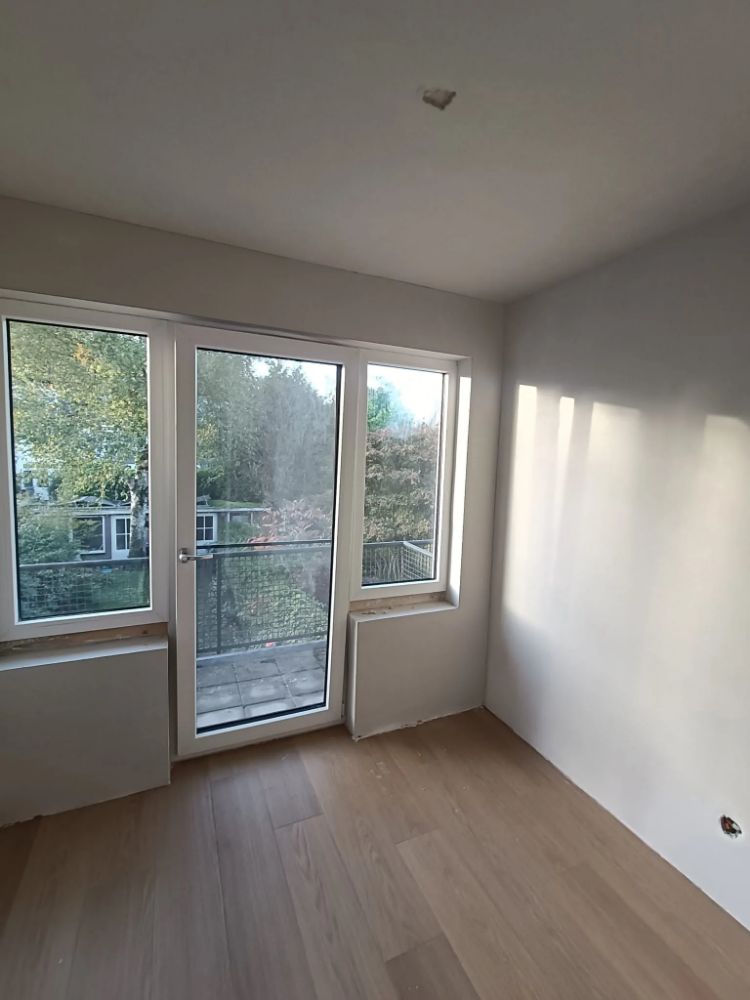
This private homeowner self-installed SpeeTile10 ceiling heating on the first floor. The system was finished with plaster.
In what type of home did you install your heating system?
A 1950s mid-terraced house.
How many people are in your household?
Two.
How did you come across WARP Systems?
Via Alina Feenstra’s renovation vlog on YouTube.
Why did you choose a low-temperature hydronic heating and cooling system?
Because we wanted a climate-conscious choice that matches our heat pump. We chose ceiling heating since it works well with an older house and timber joists, and eliminates the need for radiators, very space-efficient.
Do you think sustainability is important? Why or why not?
We think it’s very important to make our home sustainable. We want to minimize our emissions, which is why we opted for triple glazing, a heat pump, solar panels, insulation, and low-temperature ceiling heating.
Do you have specific sustainability goals for the future?
We plan to switch to an electric car so we can use our generated energy directly. We’ll continue insulating and are considering a home battery.
What convinced you to choose self-installation?
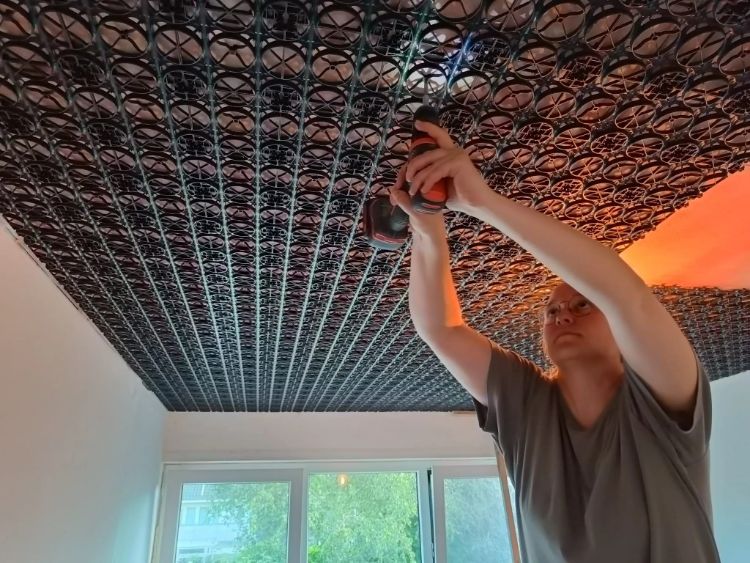
Floris from WARP explained how we could install it ourselves, and we were eager to tackle the project. The provided instructions were clear. It was some work, but we’re proud of the result!
How did you experience the installation overall?
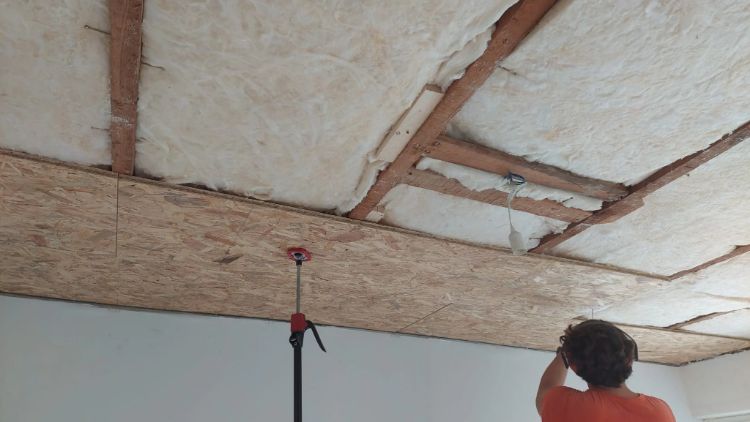
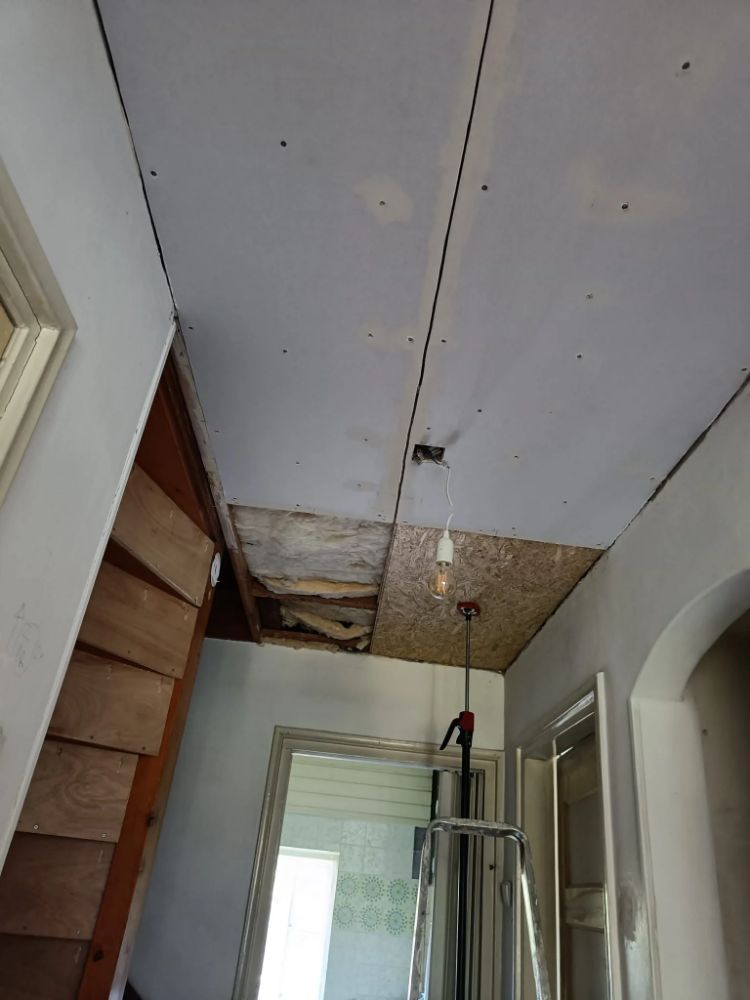
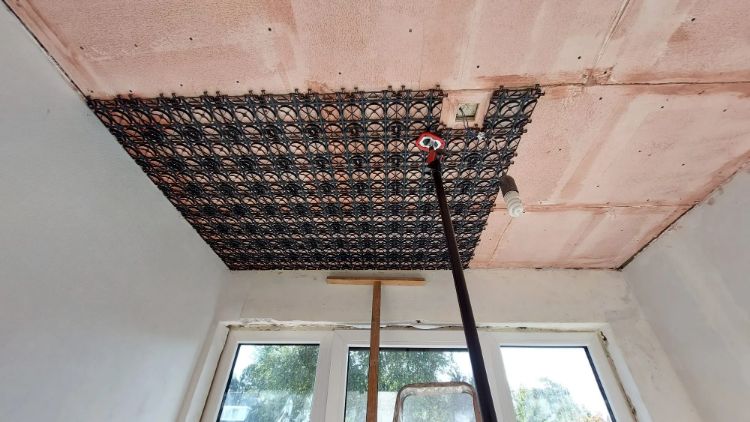
We enjoyed learning how the system works. The manual offered great tips and links to clear instruction videos. Hanging the manifold was straightforward. In two weekends and a few evenings we installed the entire system. One thing to note: it’s important to reinforce the ceiling, which we did using OSB boards, this added some extra work. We eventually found a plasterer willing to finish the ceiling; he needed detailed info since he hadn’t plastered ceiling heating before. The documentation on WARP’s site helped, though it was hard to locate, our tip would be to include this document directly with the customer’s materials.
Which aspects were easier than expected?
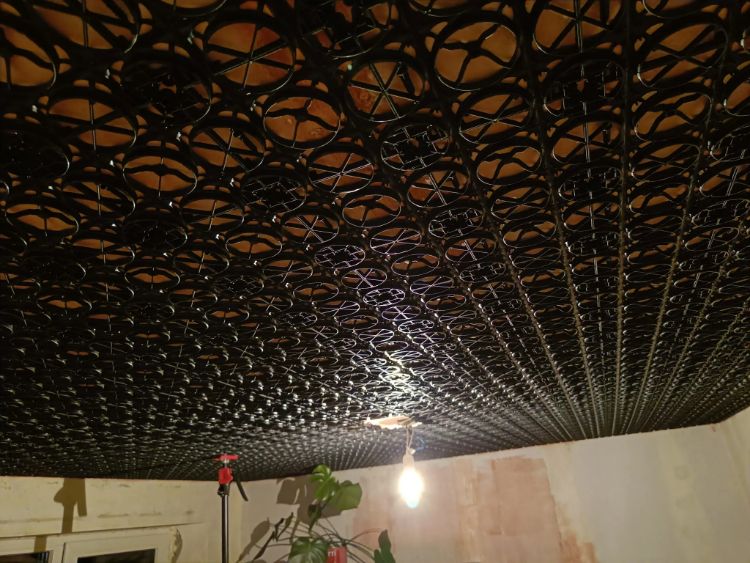
Hanging the black mats and forming the green loops was very easy. Sometimes we had to puzzle through minor discrepancies between reality and the layout plan, but we always resolved them. Connecting the green pipes to the manifold also went smoothly.
Which aspects required extra effort?
Drilling holes for the pipe penetrations through the walls took a lot of time. It’s tricky to place them as close to the ceiling as possible. Preparing the ceilings was laborious because we needed both OSB and then plasterboard. Occasionally the central junction box didn’t line up perfectly with the end of a circuit, which required some extra problem-solving.
Did you use the installation tools and instruction videos? If so, how helpful were they?
We sometimes used the videos. They gave a good overall sense of the process when the manual alone was hard to visualise. However, hanging the manifold and connecting the green pipes was harder to follow on video, so the manual was more reliable for those steps.